What does industrial electrical work involve?
Three-phase supplies and distribution, connecting and isolating machinery, containment and cable management, and maintenance on installations that are working hard in conditions that domestic wiring never sees.
The practical differences are load, environment and downtime. Loads are larger and often unbalanced, so distribution has to be designed rather than assumed. The environment is harsher: dust, moisture, vibration and physical damage all shorten the life of an installation, which is why containment and the right enclosures matter more than they do in a house. And downtime is expensive, so isolation has to be planned around production.
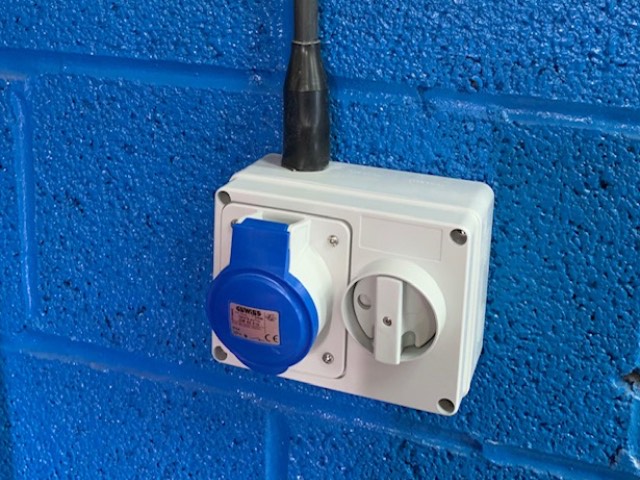
Can you connect new machinery?
Yes, including the supply, the isolator and the final connection, provided the incoming supply and the distribution can carry it. That last part is the question worth asking before the machine arrives rather than after.
What we need is the machine's electrical data: the load, the phases, and any starting characteristics, because a motor that draws heavily on startup can be the thing that decides whether the existing supply is adequate. Bring us in at the specification stage if you can. It is a much cheaper conversation than the one where a machine is sitting on the floor waiting for a supply that needs the network operator involved.
What affects the cost of industrial work?
The load, the distance from the distribution board, the containment the environment demands, and whether production has to keep running while the work is done.
Containment is the item people do not expect. Running armoured cable on tray across a workshop ceiling is a different cost from clipping cable to a wall, and it is what makes an industrial installation last. Working around production, in short windows or at night, costs more than a clear run at it. As with commercial work, we will lay out that trade-off rather than choosing for you.
We do not publish a price list, because an honest price depends on what is actually there. What we do instead is come and look, then give you a written quote before anything starts, and that quote is the price you pay unless you ask for something different or we find something that could not have been seen beforehand. If we do, we stop and tell you what it means before carrying on.
Who is responsible for the supply before the meter?
The network operator, not us. Altering or upgrading the incoming supply is their work, and it is a separate job with a separate cost and its own lead time.
Where that is what a project needs, we will tell you plainly and help you arrange it, but we will not quote it as though it were ours to do. Being clear about that boundary early is usually the difference between a project that runs to plan and one that stalls. Our terms section 9 sets out the same point.
What we cover
- Three-phase power and distribution
- Machinery connections and isolators
- Containment and cable management
- Maintenance and fault-finding
- Inspection and testing
Common questions
Do you work on three-phase installations?
Yes, three-phase distribution and machinery connections are a regular part of our industrial work.
Can you work around our production schedule?
Yes, and it is usually the only sensible way. Tell us the windows when circuits can be isolated and we will plan the work into them.
Can you tell us whether our supply will take a new machine?
We can assess the existing supply and distribution against the machine's electrical data. If the incoming supply needs upgrading that is the network operator's work, and we will tell you before you order.